
Singapore has become the default base for emerging PE and VC managers in Asia — regulatory clarity, a purpose-built fund structure and credible tax incentives. But "launch a fund" is really five decisions that move together. Here is the roadmap, with links to the detail behind each step.
1. Define the thesis and economics
Before any structure, fix the strategy: sector, stage, cheque size, target fund size and the team's edge. Then model the economics LPs will ask about — administration fee, carry, hurdle and the gross-to-net gap. Our Administration Fee & Carry Modeler and Distribution Waterfall Calculator let you pressure-test the terms before they go in a deck.
2. Choose the structure: usually a VCC
The Variable Capital Company (VCC) is the standard vehicle — umbrella or standalone, with ring-fenced sub-funds and variable capital. The structure decision drives cost and speed for every future fund. See How to Set Up a VCC in Singapore (2026) for the detail, and compare options with the VCC Structure Comparator and Cost Estimator.
3. Get the manager licensed
The fund manager must be authorised by MAS. Pure-play VC managers can use the lighter VCFM route; most others hold an Accredited/Institutional LFMC. The RFMC regime closed to new applicants in 2024, so plan around LFMC. Full detail in Fund Administration Licensing in Singapore (2026), and map your regime with the Licence Estimator.
4. Apply for a tax incentive
A VCC is a structure, not an exemption. To exempt qualifying fund income from Singapore tax, apply for Section 13O (from S$20M AUM) or 13U (from S$50M). The conditions — headcount, local spend, Singapore investment — differ; we compare them in Section 13O vs 13U (2026).
5. Appoint service providers and open accounts
You will need a fund administrator, a Singapore-based auditor, a company secretary, and bank and custody accounts. Bank account opening is frequently the critical path — start it early. Investor onboarding then runs KYC/AML before first close.
The realistic timeline
For a first-time manager, expect the licence (~4 months for a VCFM), the structure and the incentive application to overlap. End to end, a realistic plan runs several months — paced by licensing and bank onboarding rather than incorporation, which is fast.
After first close, operations begin
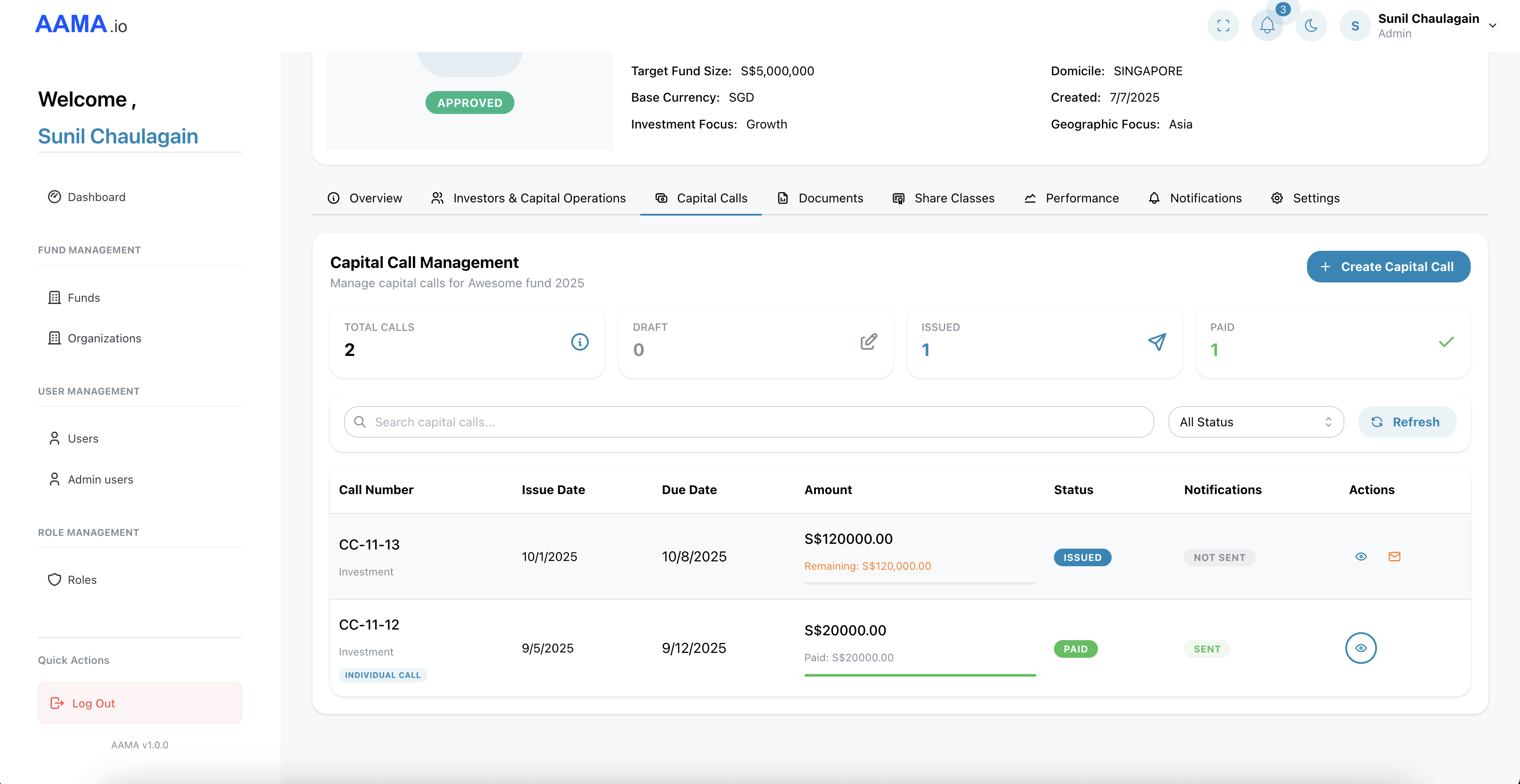
The launch is the easy part to romanticise; the recurring work is capital calls, NAV, IFRS 9 / SFRS(I) 9 accounting, LP reporting and audit. That is exactly what an operating platform is for — see how IFRS 9 measurement works in practice in IFRS 9 / SFRS(I) 9 for Funds.
This guide is general information, not legal, tax or regulatory advice. Requirements reflect MAS, ACRA and IRAS rules as understood in 2026 — confirm the current position with the relevant authorities and licensed advisers.
Launching in Singapore? Talk to our team about running the whole operation — administration, accounting and the LP portal — on aama.io from first close.