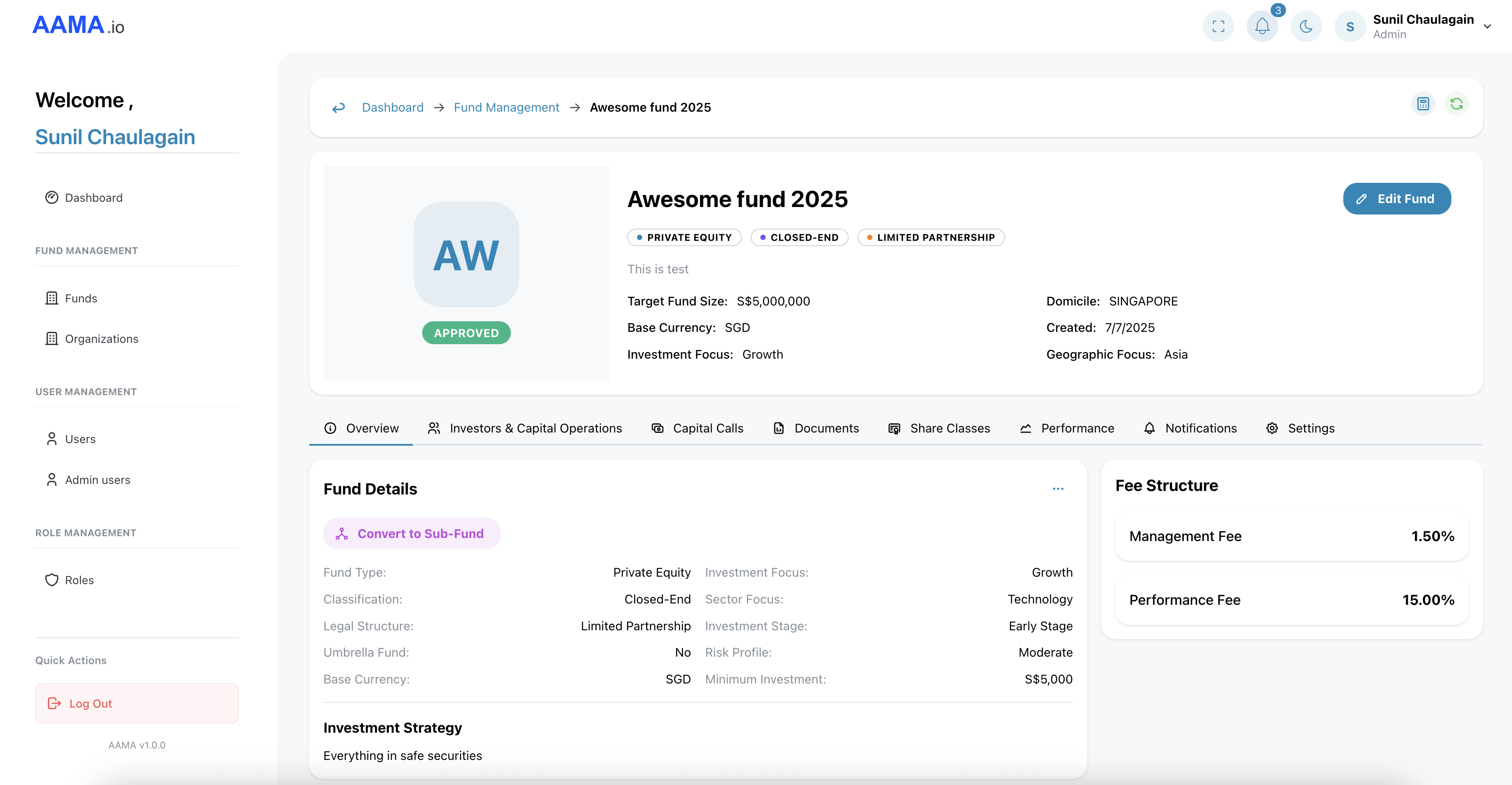
The private equity industry is experiencing a major shift toward digital transformation. PE fund administration has evolved from manual, paper-based processes to sophisticated digital fund administration tools that automate operations and improve accuracy. As we move through 2025, private equity software solutions are becoming essential for firms looking to stay competitive and efficient. Fund managers who continue relying on outdated systems find themselves at a significant disadvantage. The modern private equity software offers comprehensive solutions that address everything from fund accounting to investor relations, making it easier than ever to manage complex fund operations. In this blog, we’ll explore how AAMA.io addresses the unique challenges faced by single and multi-family offices, and how it simplifies compliance, reporting, co-investment tracking, and fund structuring, all while aligning with Singapore's regulatory framework and tax incentives like Section 13O and 13U.
The Current State of PE Fund Administration.
Today's private equity landscape is more complex than ever before. Fund managers oversee multiple investment vehicles, manage relationships with numerous limited partners, and navigate increasingly complex regulatory requirements. Traditional fund accounting automation has become a necessity rather than a luxury. The average private equity firm manages between 3-8 active funds simultaneously, each with unique structures, reporting requirements, and investor bases. This complexity has made manual processes not just inefficient, but practically impossible to manage effectively. Modern private equity softwares address these challenges by providing integrated solutions that handle multiple aspects of fund administration from a single dashboard. These systems eliminate the need for multiple software solutions and reduce the risk of errors that come with manual data entry and reconciliation.
Legacy Systems vs Modern Fund Platforms.
The difference between legacy systems vs modern fund softwares is striking. Traditional systems often require significant manual intervention, lack integration capabilities, and provide limited real-time reporting functionality.
Characteristics of Legacy Systems:
- Manual data entry and reconciliation processes.
- Limited integration with third-party systems.
- Batch processing that delays reporting.
- Inflexible reporting formats.
- Limited scalability.
Modern Fund Platform Advantages:
Fund operations softwares today offer real-time processing, automated workflows, and comprehensive integration capabilities. These systems provide fund managers with instant access to critical information and enable them to make informed decisions quickly. Modern softwares typically include cloud-based infrastructure, which provides better security, automatic updates, and reduced IT overhead. The digital fund stack approach allows firms to customize their technology solutions while maintaining consistent integration between different components.
1. Benefits of Fund Automation Tools.
The benefits of fund automation tools extend far beyond simple time savings. These systems transform how private equity firms operate, providing measurable improvements in efficiency, accuracy, and compliance.
2.Operational Efficiency
Automation reduces the time required for routine tasks by up to 80%. Automated fund workflows handle repetitive processes such as data collection, validation, and report generation without human intervention. This allows staff to focus on higher-value activities such as analysis and strategy development.
3. Improved Accuracy.
Manual processes are prone to human error, which can have significant consequences in fund administration. Automated systems eliminate most data entry errors and provide built-in validation rules that catch inconsistencies before they become problems.
4. Enhanced Compliance.
Fund compliance software ensures that all regulatory requirements are met consistently. These systems automatically track compliance deadlines, generate required reports, and maintain audit trails that satisfy regulatory requirements.
5. Better Investor Relations.
LP reporting automation capabilities enable fund managers to provide investors with timely, accurate, and professional reports. Modern systems can generate customized reports for different investor types and deliver them automatically according to predetermined schedules.
Key Features of Modern Private Equity Platforms.
Contemporary private equity fund administration software includes several essential features that distinguish it from older systems.
Fund Performance Dashboards.
Fund performance dashboards provide real-time visibility into key metrics across all funds. These dashboards typically include.
- Portfolio company performance metrics.
- Fund-level returns and distributions.
- Cash flow projections.
- Benchmark comparisons.
- Risk analytics.
Integrated Accounting.
Modern softwares include comprehensive fund accounting automation that handles complex partnership accounting requirements. These systems manage capital calls, distributions, carry calculations, and fee computations automatically.
Document Administration.
Digital document administration systems organize and secure all fund-related documents, making them easily accessible to authorized users while maintaining proper security controls.
Workflow Administration.
Automated fund workflows guide users through complex processes, ensuring that all required steps are completed and approved by appropriate personnel.
How to Digitize Private Equity Workflows.
Understanding how to digitize private equity workflows is crucial for firms looking to modernize their operations. The digitization process involves several key steps.
Assessment and Planning.
Begin by mapping current workflows and identifying pain points. This assessment should include input from all stakeholders, including fund managers, operations staff, and IT personnel.
System Selection.
Choose a modern private equity software that aligns with your firm's specific needs. Consider factors such as fund size, investment strategy, and regulatory requirements when evaluating options.
Data Migration.
Plan carefully for data migration from legacy systems. This process often reveals data quality issues that need to be addressed before moving to the new software.
Training and Change Administration.
Successful digitization requires comprehensive training and change administration. Users need to understand not just how to use the new system, but why the changes benefit them and the organization.
Continuous Improvement.
Digital transformation is an ongoing process. Regular reviews and updates ensure that the system continues to meet evolving needs and takes advantage of new capabilities.
Choosing the Right PE Fund Software.
Choosing the right PE fund software requires careful consideration of multiple factors. The decision impacts not just current operations, but also the firm's ability to scale and adapt to future requirements.
Evaluation Criteria.
When evaluating digital fund administration tools, consider:
Functionality: Does the system handle all required processes? Integration: Can it connect with existing systems and data sources?<.br> Scalability: Will it grow with your firm? Security: Does it meet industry security standards? Support: What level of ongoing support is provided? Cost: What are the total ownership costs?
Vendor Assessment.
Look for vendors with proven experience in private equity. The best fund operations software providers understand the unique requirements of PE firms and can provide relevant references and case studies.
Implementation Considerations.
Consider the implementation timeline and resource requirements. Some systems can be deployed quickly, while others require extensive customization and integration work.
Regional Spotlight: VC Fund Administration Singapore.
Singapore has emerged as a major hub for venture capital and private equity activity in Asia. VC fund administration Singapore presents unique opportunities and challenges that influence technology adoption.
Regulatory Environment.
Singapore's regulatory framework supports innovation while maintaining investor protection. The Monetary Authority of Singapore has created clear guidelines for fund administration that modern softwares help firms comply with automatically.
Market Characteristics.
The Singapore market includes both domestic and international investors, requiring systems that can handle multiple currencies, languages, and reporting requirements. Digital fund administration tools provide the flexibility needed to serve this diverse investor base.
Technology Adoption.
Singapore-based funds have been early adopters of financial technology. Many firms use cloud-based private equity software 2025 solutions that provide global accessibility while meeting local regulatory requirements.
Fund Accounting for Family Offices .
Fund accounting for family offices requires specialized capabilities that differ from traditional private equity fund accounting. Family offices often manage multiple investment vehicles and require more personalized reporting and service.
Unique Requirements.
Family offices typically need:
- Consolidated reporting across multiple entities
- Tax-efficient structuring support
- Estate planning integration
- Personalized investment reporting
- Multi-generational account administration
Security in Digital Fund Administration .
Secure fund administration for private equity firms requires strong cybersecurity measures. Modern softwares implement multiple layers of security to protect sensitive financial and investor data.
Security Features.
Key security capabilities include:
- Multi-factor authentication
- Data encryption at rest and in transit
- Role-based access controls
- Audit logging and monitoring
- Regular security assessments
- Disaster recovery planning
Compliance Requirements.
Fund compliance software must meet various regulatory requirements, including data protection laws, financial regulations, and industry standards such as SOC 2 Type II.
Future Trends in Fund Technology:
The future of private equity software 2025 includes several emerging trends:
Artificial Intelligence.
AI capabilities are being integrated into fund administration softwares to provide predictive analytics, automated data validation, and intelligent reporting.
Blockchain Technology.
Blockchain offers potential improvements in transparency, security, and efficiency for fund administration processes.
Enhanced Analytics.
Advanced analytics capabilities provide deeper insights into fund performance, market trends, and operational efficiency.
Mobile Accessibility.
Mobile-first design ensures that fund managers can access critical information and approve transactions from anywhere.
Conclusion.
The transformation of PE fund administration through modern technology represents a fundamental shift in how private equity firms operate. Digital fund administration tools provide significant advantages in efficiency, accuracy, and scalability that are essential for success in today's competitive environment. Firms that embrace fund accounting automation and modern private equity softwares position themselves for sustainable growth and improved investor satisfaction. The key is selecting the right technology partner and implementing solutions that align with specific business requirements. As we continue through 2025, the gap between firms using modern technology and those relying on legacy systems will only widen. The time to act is now – evaluate your current systems, identify improvement opportunities, and begin your digital transformation journey.
Ready to modernize your business operations in Singapore?
Book a Demo with AAMA.io and discover how we can help you digitize fund operations, support compliance, and manage your wealth more effectively.Prefer to talk directly? Contact our experts to build your custom fund operation setup.